

State DHS secretary visits Arc Human Services’ Smart Home Lab
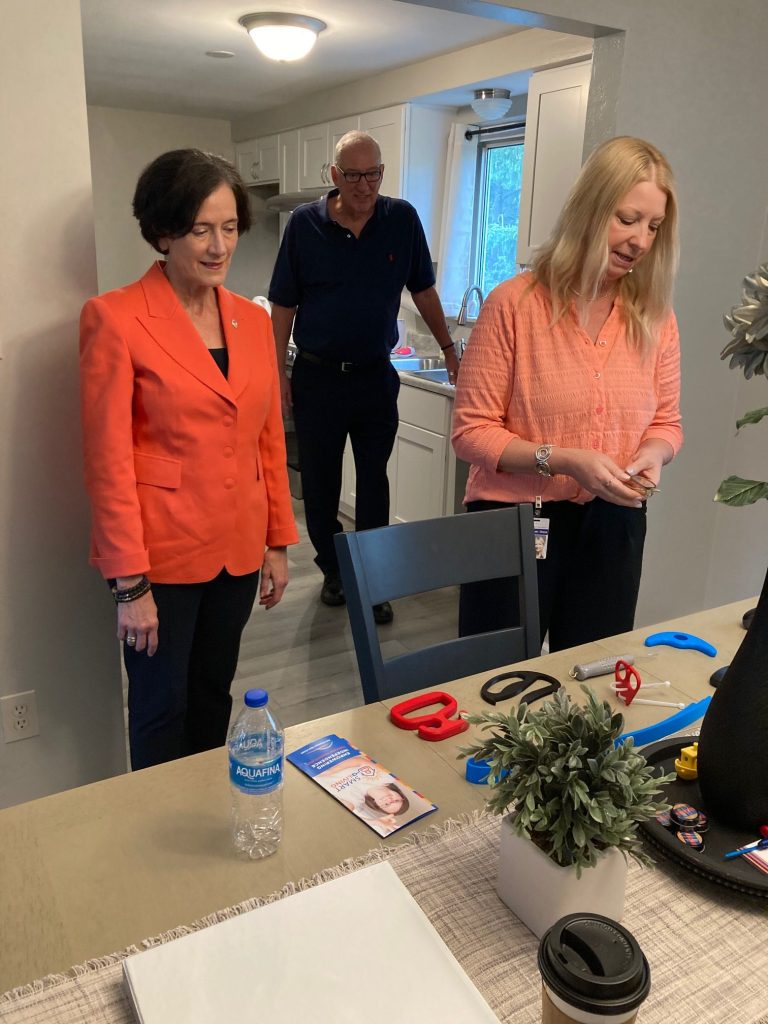
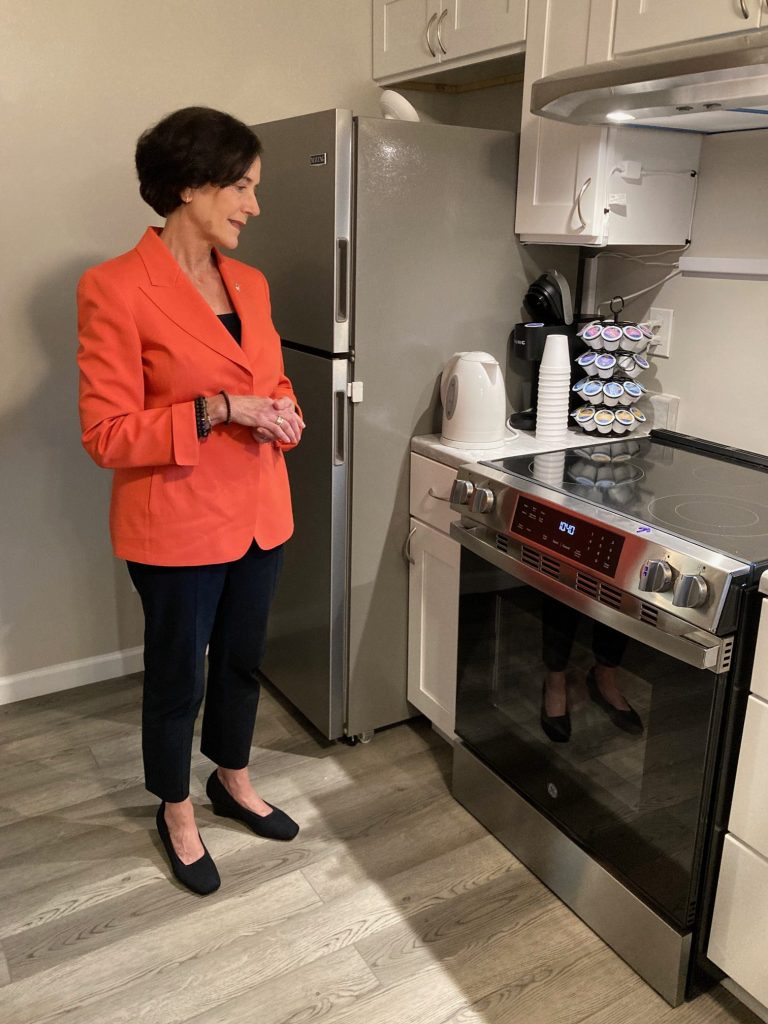
Step inside the brick ranch house on Marion Drive and it seems like one of those airy and impeccable abodes that serve as model homes in subdivisions.
The furniture is cozy, the television is large and there seems to be nary a speck of dust in sight.
The Peters Township dwelling is, however, a little bit different from an otherwise unassuming neighborhood house that’s been given a spit and polish. It’s what is being called a Smart Home Lab, and serves as a model for how people with developmental or intellectual disabilities can live independently, thanks to the assistive technology that is present in every room. It’s operated by Arc Human Services, and opened last summer.
On Wednesday, it was visited by Pennsylvania Department of Human Services Secretary Dr. Val Arkoosh, who said, “I’ve never seen a house with all these incredible gadgets.”
Arkoosh pointed out that helping people with disabilities has been a goal for the administration of Gov. Josh Shapiro since it took office in 2023. She noted that wait times for services for individuals with disabilities have gone down over the last three years.
The proposed 2026-27 budget that Shapiro unveiled in February includes $30 million in funding to expand home and community-based programs for adults with developmental and intellectual disabilities. The Shapiro administration says the $30 million in state funding, along with $36 million in federal dollars, will help enroll more than 1,600 additional Pennsylvanians in home and community-based Medicaid waiver services.
Arkoosh called the Smart Home Lab “one innovative way the investments the Shapiro administration can help make community living possible.”
Visitors can stop at the Smart Home Lab for a couple of hours or a couple of days and be assessed and assisted on how various kinds of technology, both common and specialized, can allow them to live independently. There are apps that help out with daily tasks, medication dispensers, voice-activated prompts in the kitchen that assist with meal preparation, a “stranger danger” panic button by the front door and sensors that detect when someone gets in or out of bed.
“We want it to look like a house, so you realize, ‘I could do that at my house,'” according to Michael Brownlee, director of communications and development at Arc Human Services. “It’s person-centered.”
Arc Human Services purchased the home in 2024, using grant money and funds from Washington County’s Local Share Account, which distributes gambling revenue for community services and projects.
The Shapiro administration is seeking funding for programs for adults with disabilities in a process that last year was messy – the $50 billion budget was signed by the governor more than four months after its deadline. Does Arkoosh think the 2026-27 budget will be approved by June 30 this year?
“We are very hopeful,” she said.